Why you're exhausted after eight hours of sleep
You were in bed for eight hours. You didn’t wake in the night, or if you did you don’t remember it. And you got up feeling as though you’d been awake for most of it. The number was fine. The night wasn’t.
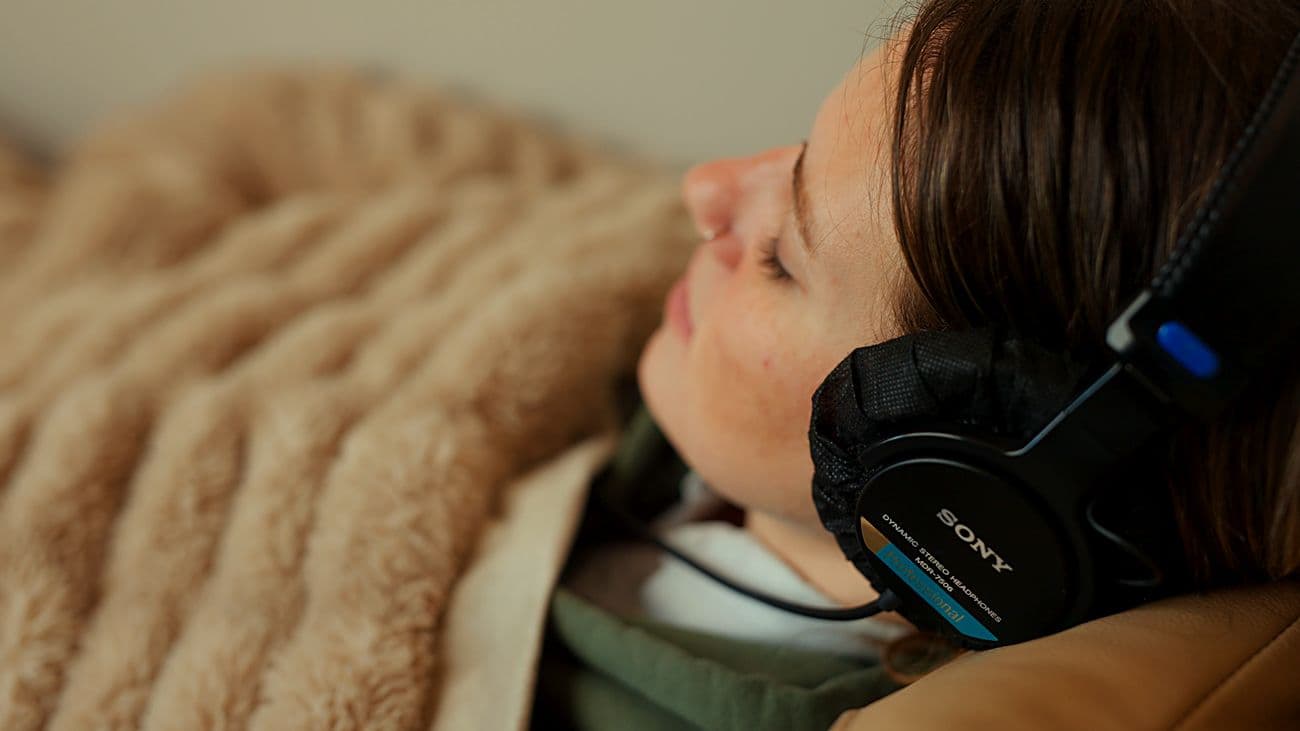
Quantity is the wrong measure
Hours in bed is the figure everyone tracks, because it is the one that is easy to count. It is also the one that explains the least. What people arrive describing is eight hours that feel like four, waking exhausted no matter how long they slept, and nights that are simply inconsistent — different every week, with nothing obvious separating a good one from a bad one.
What that pattern points at isn’t duration. Attention difficulty, emotional reactivity, poor sleep and mental fatigue co-occur at rates far above chance, and it is more useful to read that as one problem with several outputs than as four separate ones. Sleep is one of the outputs. Counting hours measures the bed; it doesn’t measure the system that was supposed to be using it.
A wired evening doesn’t stand down because the lights went out
The most common version of this is an evening that never came down. A wired, on-alert evening doesn’t stand down just because the lights went out — the room changed and the system didn’t. Sleep then happens on top of a state that was never going to be slept through, and the morning reports on that rather than on the clock.
Eight hours spent on top of a system that never came down is eight hours of the wrong thing.
It is also why the same person gets a good night and a bad one with no change in routine. Regulation is a capacity that depletes and recovers, and what was available on Tuesday is not what is available on Thursday. Nothing about the bedtime got harder. What was there to meet it got smaller.
Have the ordinary causes ruled out first
This belongs before anything else on this page, and one item belongs before the rest of it. Sleep apnea produces exactly this picture — a full night, every morning, unrefreshing — and it is common, it is identified by testing rather than by inference, and it is not something to reason your way past. Thyroid problems, low iron, medication effects, and mood and anxiety disorders all produce it too. If nobody has looked, that is the first move. We can’t test for any of it, and neither can an article.
What tends to help
Address the load rather than the night. Food, unbroken recovery time and what the day actually asked of you are not the soft version of sleep advice — they are the largest single lever most people have, and the one most often skipped for being unglamorous.
Lower the demand on the evening before it fails. What the last two hours before bed contain matters more than what happens in the final ten minutes, and a decision made at nine o’clock is a great deal easier than one made at eleven.
And be careful about the conclusion when the standard advice doesn’t work. Most strategies for regulation require the very capacity that is in short supply — they work when you don’t need them and fail when you do. That is an argument against the conclusion, not against the strategies.
Where LENS fits
Sessions are quiet and passive — small sensors, a very low-energy feedback signal, nothing to perform and nothing to practise between visits. LENS isn’t a treatment for sleep disorders, and it belongs after the rule-out above rather than instead of it.
Sessions run about 30 minutes in a comfortable chair. Sleep is one of the first things we ask about at every visit, and the plan follows what your nights are actually telling us — falling asleep, staying asleep, and how the mornings feel. How much changes varies from person to person.
Where this goes next.
LENS is a wellness service. It works alongside — never in place of — your doctor, therapist, or school supports.
The next step is a conversation, not a commitment.
Tell us what’s going on. We’ll listen, answer honestly, and tell you plainly whether LENS is a fit — on the phone, before you book anything.
If we don’t think LENS is right for you, we’ll tell you on the phone — before you ever book or pay for anything.
The call is free · No referral needed · HSA & FSA accepted