A gentle signal, a comfortable chair, and nothing to perform.
LENS stands for Low Energy Neurofeedback System. Here’s the whole idea without the jargon — and exactly what a session feels like from the chair.
Your brain is built to shift gears. Sometimes it gets stuck in one.
Gearing up, settling down.
A healthy brain is always shifting. It ramps up to focus or respond, then settles back down to rest, sleep and recover. That flexibility is what makes calm, focus and good sleep possible.
Locked in one gear.
Lose that flexibility and the brain can stay put. Sound familiar?
This is where we come in.
LENS gives your brain a brief look at its own activity, so it can find its way back to that flexibility on its own. Nothing for you to do — here’s how it works.
How LENS works
The sensor reads first. Small sensors sit on the scalp and read the brain’s electrical activity at that spot. Nothing goes in — the system is listening.
Then it answers. Based on what it read, the system sends back a brief feedback signal, far weaker than the signal from the phone in your pocket, lasting a fraction of a second. That’s the whole thing. It’s called low-energy for a literal reason.
The brain does the rest. The signal carries no instruction. What follows is your own nervous system responding to information about itself — which is why there’s nothing to practice, watch, or concentrate on. Most people, including young children, feel nothing at all. Sessions run about 30 minutes in a comfortable chair.

What it feels like from the chair.
Most visits are over in well under an hour.
A real check-in
Sleep, mood, focus, energy — how we know what's actually changing for you.
Sensors on, feet up
A comfortable chair and a few small sensors. No gel caps, no discomfort.
Nothing to do
The feedback lasts moments; most people feel nothing. Kids can just be kids.
Review & adjust
Your practitioner fine-tunes the plan; you leave knowing where things stand.

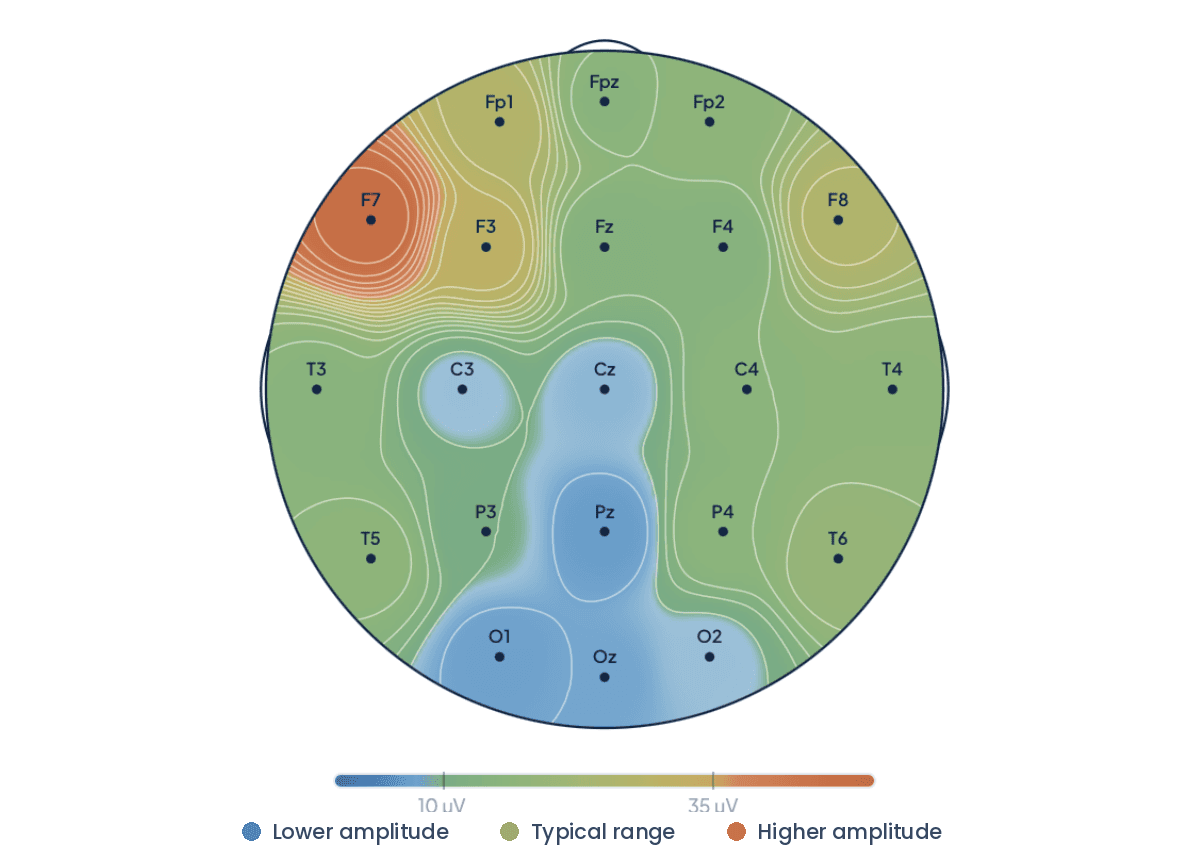
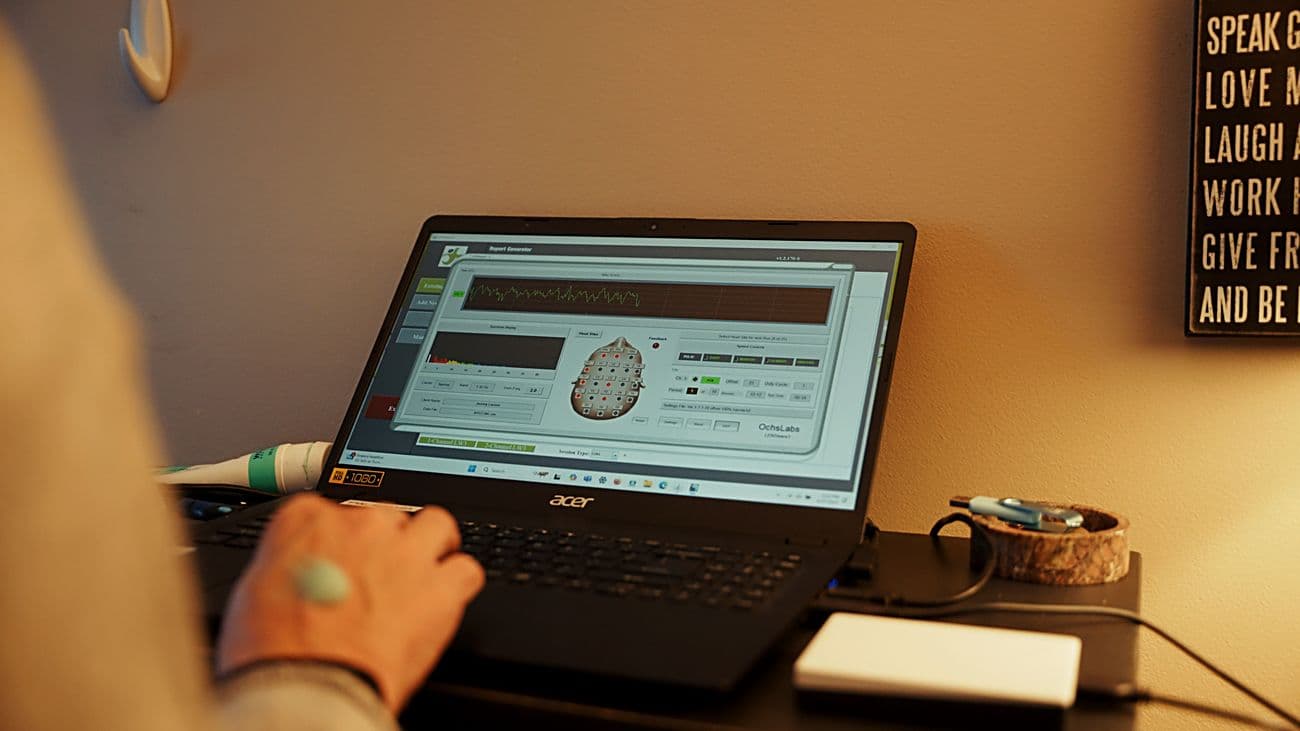
The recording your plan is built from.
A Brain Map records 21 points on your first visit. What each point tells us, what the written plan contains, and what the map can’t tell you are on their own page.
What to expect
Clients commonly report sleeping more easily, feeling steadier, or thinking more clearly over a series of visits. How much changes varies from person to person, and we review what you’re actually noticing at every visit — that’s what the plan follows.
What LENS is — and what it isn’t.
The best way to understand LENS is to talk with someone who does it every day.
Tell us what’s going on. We’ll listen, answer honestly, and tell you plainly whether LENS is a fit — on the phone, before you book anything.
If we don’t think LENS is right for you, we’ll tell you on the phone — before you ever book or pay for anything.
The call is free · No referral needed · HSA & FSA accepted