Why you stay on guard in rooms where nothing is wrong
You take the seat that faces the door. You know where everyone in the room is without deciding to look. A door closes down the hall and your body answers before you do. Nothing is wrong, you know nothing is wrong, and the watch keeps going anyway. This won’t ask you what happened. It’s about the watch.
Keeping watch is a state, not a choice
People describe this to us in plain terms: staying vigilant in rooms where nothing is wrong, startling easily and settling slowly, a body braced long after the danger has passed. Some call it hypervigilance. Some never call it anything, because it doesn’t feel like a feeling. It feels like the way rooms are.
It’s worth naming as a state of the nervous system rather than a personality trait or an overreaction. Arousal regulation is a measurable property of the nervous system, and it varies — across people, and within the same person across a day. Startling fast and settling slowly is what the top of that range looks like from the inside.
Why knowing you’re safe doesn’t stand it down
The hardest part to explain to anyone else is that you already know. You can look around an ordinary room, list every reason it’s fine, and still not get your body to agree. That isn’t a failure of reasoning, and more reasoning rarely moves it. Explanation is input, and a system already on alert has little room for more.
You already know the room is safe. Knowing was never the part that was missing.
Going up and coming back down are also two different jobs. A body that startles in a second and takes the rest of the afternoon to settle isn’t being dramatic about a door. It’s a system that isn’t moving between states cleanly — and the cost shows up elsewhere. Staying on guard all day draws on the same capacity that sleep, focus and calm need, which is why those so often end up carrying the weight.
The past has its own place
What happened, and what it means, is work for a therapist — one you trust, and who works with trauma. If you already have that person, keep going. If you don’t, they’re worth finding. That conversation belongs with them, not with an article, and not with us.
Some of the physical side deserves a doctor’s eyes too. Sleep apnea, thyroid problems, medication effects, and mood and anxiety disorders can each produce parts of this picture — the startle, the broken sleep, the body that won’t settle — and they’re identified by testing rather than by inference. We can’t do that, and neither can an article. If nobody has looked, that’s a good place to start.
What tends to help day to day
Treat the load as the intervention. Sleep, food and unbroken recovery time are the largest single lever most people have, and the first thing dropped when a week fills up. A system keeping watch all day is spending from the same account.
Build predictability on purpose. Something that runs without your attention beats something that needs it — the same sequence each evening, an alarm instead of an intention, a decision made in the morning about what the evening is allowed to contain.
Go easy on the verdict when a technique doesn’t land. Most strategies for regulation need the very capacity that’s in short supply — “notice it before it builds” requires the noticing. They work when you don’t need them and fail when you do. That says nothing about how hard you tried.
And don’t grade yourself on your best day. Capacity runs down and recovers, so the room that was fine on Tuesday can be hard on Thursday. Nothing about the room changed. What you had available to meet it did.
Where LENS fits
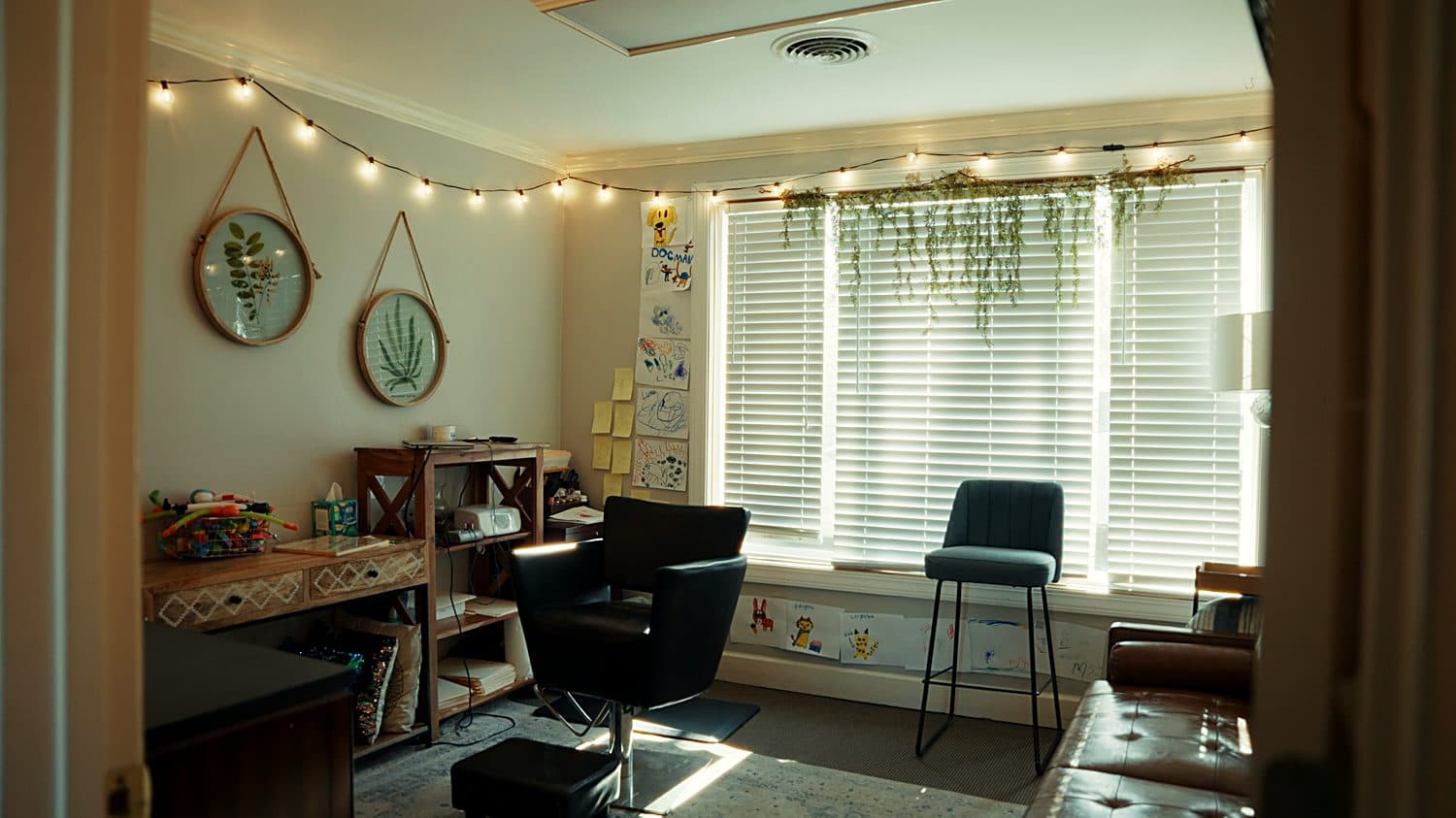
LENS doesn’t require you to retell or relive anything. There’s nothing to talk through in the chair and nothing to perform. Sessions are quiet and predictable by design: a quiet room, a comfortable chair, small sensors, and a brief, very low-energy feedback signal. Most people feel nothing at all, and we’ll walk you through everything before anything begins. Many clients describe the sessions themselves as calming.
Every visit opens with a check-in — sleep, mood, focus, energy — and we track how settled you actually feel. You’re always in control of what you share. Sessions run about 30 minutes. Your first visit is The Harmonized Brain Map: a conversation about how things are now and a baseline recording that guides your starting plan. LENS is routinely used alongside therapy, and we’re glad to coordinate with the therapist you already trust.
Where to read more.
LENS is a wellness service. It works alongside — never in place of — your doctor, therapist, or school supports.
You don’t have to explain anything to ask a question.
Share as much or as little as you like. We’ll listen, answer honestly, and say plainly if LENS isn’t the right fit — before you book anything.
If we don’t think LENS is right for you, we’ll tell you on the phone — before you ever book or pay for anything.
The call is free · No referral needed · HSA & FSA accepted